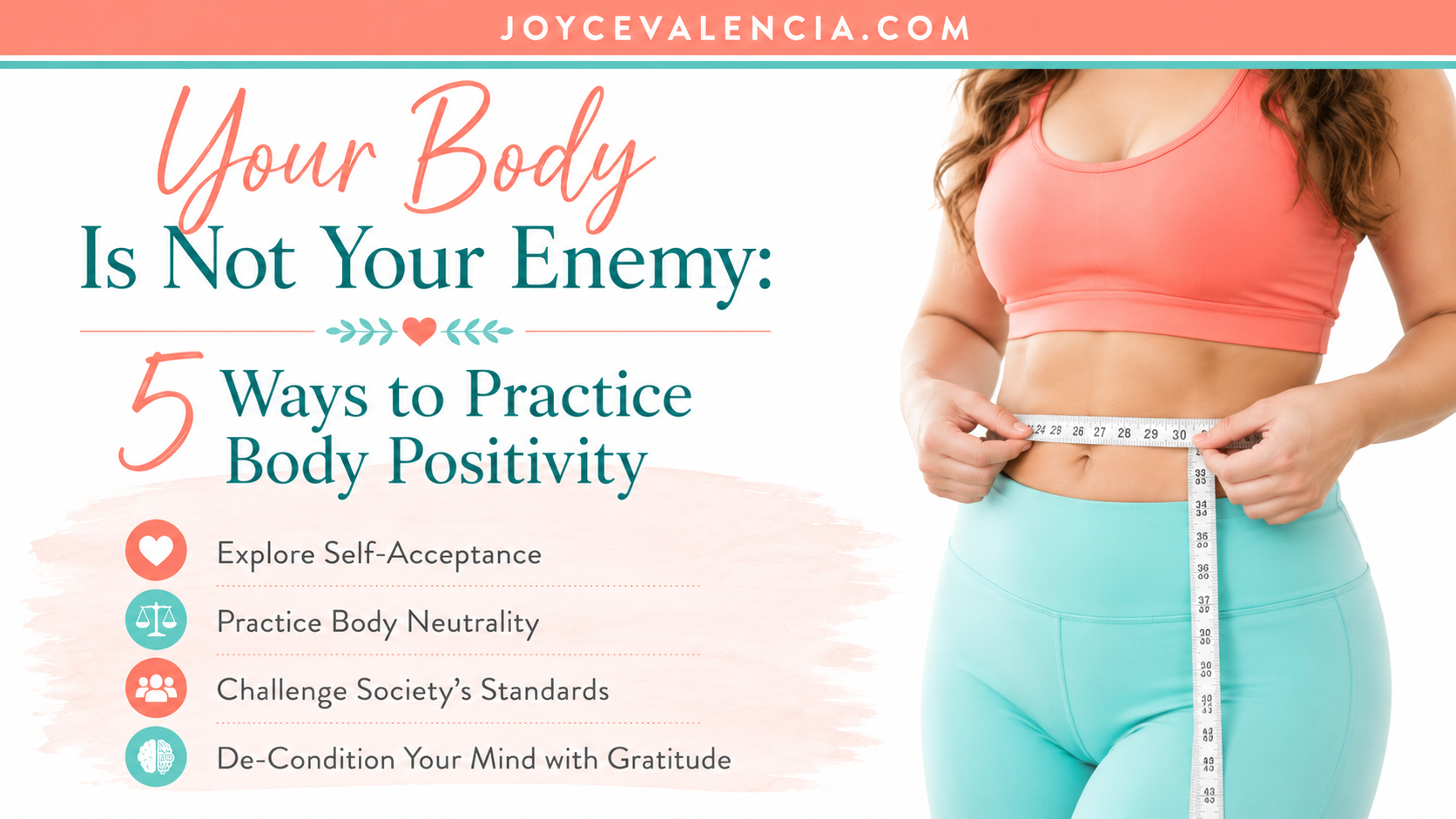
Your Body is Not Your Enemy: 5 Ways to Practice Body Positivity
Jul 19, 2026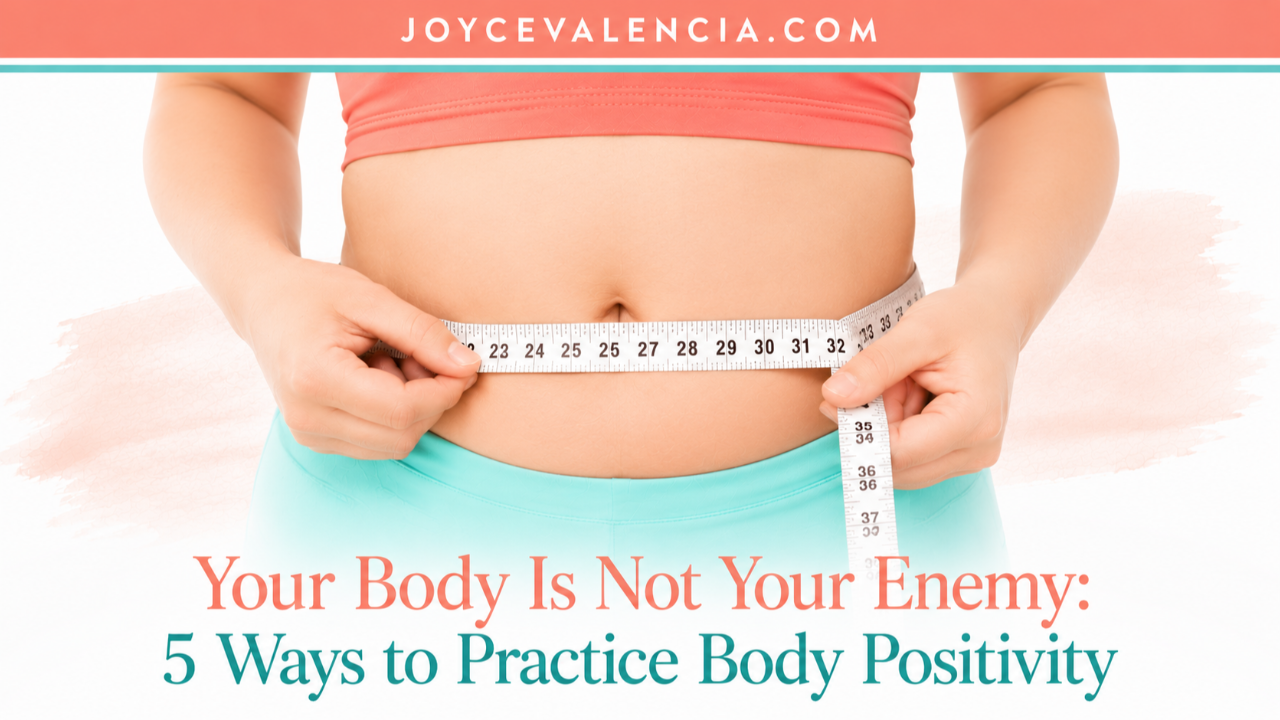
Has anyone ever looked you up and down, making a snap judgment and told you, "You should lose weight," or "Let me know if you want some workout tips"? Body positivity has become a popular movement over the last several years; yet, I often wonder if we have unintentionally complicated something that should be beautifully simple.
Body positivity is a social movement promoting self-love, acceptance and respect for all bodies despite our differences. We have become so accustomed to judging ourselves and each other through the lens of physical appearance that we sometimes forget the spiritual aspect of our well-being. As an endocrine nurse practitioner and an ally to the Health at Every Size movement, I spend my days assessing on physical exams, diagnosing medical conditions and helping patients optimize their health. As a spiritual mentor, I also recognize we are far more than our physical bodies. We are eternal and inherently spiritual souls temporarily experiencing life through flesh and bone. When we learn to appreciate both perspectives simultaneously, body positivity becomes less about loving every inch of ourselves every moment of the day and more about cultivating a quiet respect, gratitude and compassion for the sacred vessel carrying us throughout this lifetime. What body positivity is NOT is a clear disregard for one's health and glorifying the extremes of anorexia or obesity. In this article, I will share 5 ways to promote body positivity in your life today.
1. Explore What Self-Acceptance Means to You
Self-acceptance is often misunderstood as giving up or becoming complacent. But self-acceptance is the willingness to acknowledge your body exactly as it exists today while recognizing that its value has never depended upon its size, shape or appearance. Every body tells a unique story. Some bodies have carried children into this world; others have survived illness, injury or emotional trauma. Some bodies allow us to run marathons while others quietly teach us resilience through chronic disease. Every one of these experiences deserves respect rather than criticism.
Spiritually, self-acceptance is an expression of self-love. The soul does not measure worth by the number on a scale or the size printed on a clothing tag. It recognizes the divine essence that exists beneath every layer of skin. The more we identify exclusively with our physical bodies, the more vulnerable we become to comparison and insecurity. The more we remember ourselves as spiritual beings having a human experience, the easier it becomes to extend kindness toward ourselves — and to others. Caring for your body is important, but becoming emotionally attached to achieving physical perfection often distances you from the deeper truth of who you really are and puts you closer to an ego that suffers out of insecurity.
2. Focus on Body Neutrality
One of the greatest lessons I have learned in medicine is that appearances rarely tell the whole story. Patients often assume that weight alone determines health, but my clinical experience repeatedly demonstrates otherwise. I have cared for patients living in larger bodies who come to their appointments expecting devastating news because society has convinced them something must be wrong. Instead, their blood pressure is excellent, their cholesterol is normal, their blood sugar is well controlled and every screening suggests they are remarkably healthy. The only susceptibility they have at this point is the negativity absorbed by a personal trainer who tells them they can help them change or a doctor who suggests starting a GLP1 agonist.
Conversely, I have also cared for many slender individuals whose laboratory work reveals diabetes, thyroid disease, autoimmune disorders, cardiovascular risk factors or numerous other medical conditions. By the same token, people can be chronic smokers since their adolescence and for some reason in their old age they have excellent lungs still. Health cannot be accurately assessed simply by looking at someone.

This is why I appreciate the concept of body neutrality. Rather than forcing ourselves to constantly love how we look, body neutrality invites us to appreciate what our bodies do for us each day. Your heart continues beating without your conscious effort. Your lungs faithfully deliver oxygen with every breath. Your kidneys carefully regulate your body's chemistry. When we shift our attention toward function instead of appearance, our relationship with our bodies becomes grounded in appreciation rather than criticism.
3. Challenge Societal Standards
Much of our dissatisfaction with our bodies is not created internally. It has been carefully conditioned over years through media, advertising, cultural norms and even well-meaning family members. We are constantly exposed to messages suggesting there is always something about ourselves that needs fixing. The ideal body seems to change every decade and with every culture, leaving people endlessly chasing standards that were often manufactured to sell products rather than truly improve health.
As someone practicing medicine, I also encourage people to be discerning about where they receive health advice. Personal trainers can be incredibly valuable in helping individuals build strength, mobility and confidence within their professional scope. However, some venture beyond that scope by offering definitive guidance on medical conditions, nutrition or dietary supplements despite having limited education in biochemistry, pharmacology or pathophysiology. Confidence should never be mistaken for expertise. Whenever someone attempts to convince you that you are fundamentally broken or inadequate without first understanding your individual health circumstances, it is worth asking whether they are speaking from evidence or from ego.
Many of the harshest voices we encounter are simply projecting their own insecurities. People who are deeply attached to external appearances often measure their own worth through the body, making it difficult for them to see beyond it. Their judgments frequently reveal more about their own suffering than they do about yours. Recognizing this can help you release the unnecessary weight of opinions that were never yours to carry (no pun intended). It also helps you build appropriate boundaries.
4. Be Mindful of Fads
Our desire for quick transformation and instant gratification has created an enormous industry built upon promises that rarely deliver lasting results. Every year a new miracle diet emerges; and every season introduces another workout guaranteed to reshape your body. Social media influencers enthusiastically promote anything and everything to make a quick buck off of you. One such personal trainer turned online health coach on Tiktok constantly advertises losing 30 lbs in 90 days and no scholarly healthcare professional would ever encourage you to do this!
As a nurse practitioner, I encourage healthy skepticism. Whenever I see products marketed with dramatic claims and artificial urgency, I become cautious. One simple observation I often share is this: anything with an expiration date deserves thoughtful consideration before becoming part of your daily routine. That means dietary programs, coaching programs and direct-to-consumer advertised dietary supplements that often involve unsustainable changes that do not cater to your culture, your personal values for health or your lifestyle. You are more likely to lose weight by adopting a farm-to-table meal plan rather than investing in dietary programs.
Health is cultivated through consistent habits, balanced nutrition with minimal processed foods, restorative sleep, movement, stress management and compassionate self-care.
5. De-Condition Your Brain Through Gratitude
Perhaps the most powerful transformation begins with changing your relationship with your body. Our minds have often spent years rehearsing criticism until negative self-talk feels automatic. Like any conditioned pattern, however, it can be gently rewired thanks to our neuroplasticity.
One practice I deeply encourage is writing a gratitude letter to your own body. Instead of focusing on what you wish looked different, thank your organs for the work they faithfully perform every single day. Thank your heart for beating over 100,000 times each day without asking for recognition. Thank your lungs for every breath that sustains your life. And thank your endocrine system for being the well-greased engine needed to regulate every organ system in the body!
The body has amazing self-healing capabilities. When we intentionally acknowledge the intelligence of the human body, we naturally begin to view ourselves through the lens of gratitude rather than judgment. This appreciation softens our hardened defenses and establish a loving relationship with our bodies which helps to regulate your hormones. Over time, this simple exercise reminds us that our bodies have never been our enemies. They have been faithfully serving us since the very first breath we took.
Conclusion
Body positivity is not about pretending you never have difficult days or forcing yourself to love every physical feature at every moment. It is about choosing a relationship with your body that is rooted in respect instead of criticism, gratitude instead of comparison and wisdom instead of conditioning. As both an endocrine nurse practitioner and a spiritual mentor, I believe true healing occurs when science and spirituality meet. We honor our bodies by caring for them with evidence-based medicine, nourishing food, joyful movement and preventative healthcare. At the same time, we honor our souls by remembering that our identity extends far beyond our physical appearance.
One day, every physical body will complete its journey, but the soul continues onward. Perhaps that realization alone can help us release the exhausting pursuit of perfection and instead embrace the extraordinary privilege of simply being alive. Your body was never meant to become your greatest source of criticism. It was always meant to become your faithful companion on the beautiful journey home to yourself. Let your physical body be the life lesson that builds your spirituality! I finally get to write an article that truly speaks to my motto! Remember: You are beautiful inside, outside and at the soul level!

FAQ
🌱 What is body positivity?
Body positivity is the practice of respecting and accepting all bodies while recognizing that a person's worth extends far beyond physical appearance.
🌱 What is body neutrality?
Body neutrality emphasizes appreciating what your body does rather than focusing on how it looks. It prioritized function, health and gratitude over appearance.
🌱 Can someone be overweight and still be healthy?
Yes. Health is determined by many factors including vital signs, genetics, lifestyle habits and medical history rather than body weight aline.
🌱 Are fad diets good for long-term weight loss?
Most fad diets and dietary programs produce temporary results and are difficult to sustain as it does not correlate with one's culture or lifestyle. Long-term health is generally built through consistent nutrition, movement, quality sleep and healthy habits.
🌱 How can spirituality improve body image?
Spirituality reminds us that we are more than our physical bodies. By identifying with the soul rather than appearance alone, we cultivate greater self-compassion, gratitude and inner peace.
Stay connected with news and updates!
Join the mailing list to receive the latest news, discounts and updates.
Don't worry, your information will not be shared.
We hate SPAM. We will never sell your information, for any reason.
AUTHOR