
Vesak Festival: Embodying True Inner Peace in the Midst of Chaos
Apr 21, 2026
I skipped lunch at work, agreeing to see patients in this time in lieu of an early departure. I left work early for Vesak Festival 2026. This would be my first time experiencing it not as an observer of culture, but as a participant in something deeply spiritual — something alive. I was there to learn. The Vesak Festival is an international holiday also known as "Buddha Day" to commemorate the birth, enlightenment and passing away of Gautama Buddha. Naturally, we celebrate the teachings of buddha which instill peace, empathy, and compassion for others.
The Call to Something Greater
The event was hosted by the Vietnamese Buddhist Community in Northern California, and at its heart was Venerable Bhikkhu Paññākāra who led the Walk For Peace pilgrimage to Washington D.C. from October 2025 to February 2026. With San Jose having a rich Vietnamese population, this world renowned Buddhist monk guest spoke on what it means to adopt true peace from within our modern, daily lives.

Even before I saw him clearly, I felt him. There are some presences that enter a space not with noise, but with a kind of authority that softens everything around them. As he began his walk through the crowd, something remarkable happened. Hundreds of people moving, yet a deafening silence, almost eerie in the most sacred way, enveloped the open space. Police officers gently parted the crowd with a quiet reverence. And there he was, walking with a kind of regal stillness. It was not regal in the worldly sense, but in a holy, untouchable way. My breath caught in my throat as I observed Venerable Bhikkhu Paññākāra walking in his traditional robes, barefoot, and with Aloka, his loyal Peace dog, by his side. Time seemed to stand still in that fleeting moment.
When Peace Is Tested
I was fortunate to find a patch of grass to the left of the stage. It was, quite literally, a front-row seat to something I didn’t yet realize would challenge me as much as it would inspire me. In the outskirts of the crowd and to my left, cutting through the air like a blade, was the blaring voice of a group of street preachers. Their megaphone pierced the air with declarations of sin and fear — warnings of God’s wrath, condemnations of homosexuality, and demands for repentance. They were strong representatives of Christianity. At first, I was outraged. It felt deeply disrespectful, not only to the monk, but to the sacredness of the gathering itself. There was an immaturity in their delivery, a lack of awareness due to ignorance. And I could feel my body respond with a tight chest, racing thoughts, tachycardia, and that familiar surge of heat rising within me. Certain denominations of Christians simply refuse to coexist with other humans, and this hit hard especially among my own family where spirituality and religiosity are firmly rooted into all sides of my family in very unique ways.
But then, I shifted my energy.
If I was truly here to receive the teachings of peace, then I couldn’t afford to be consumed by the very emotions that stood in opposition to it. I had to get beside my feelings, not drown in them. I focused on the desire to be in the world, but not of it. And in that moment of awareness, absorbing the teachings of peace simultaneously, I recognized a humbling quality: the anger I felt, the embarrassment I carried for these preachers — it all stemmed from the same egoic space from where the Christian protesters were operating. Different expression, same etiology; energetically, I was meeting them at their level. Nothing meaningful grows from that space. Just a fleeting rush of cortisol, a momentary illusion of righteousness. This was the cherry on top to my spiritual musings!

The Embodiment of Compassion
What replaced my anger was not agreement nor submission, but compassion. Once I caught myself, I began to put into practice my own spiritual beliefs. I recognized that these individuals, too, were on their own spiritual journeys just as I am. That their understanding of God, though different from mine, was still a reflection of their current level of consciousness. And if I truly believed in honoring the invisible paths we each walk, then that belief had to extend to them as well. This, I realized, was the embodiment of what Venerable Bhikkhu Paññākāra was teaching.
He spoke of his Walk for Peace through Alabama and Georgia, where he encountered protests just like this daily. And yet, each day, he met them with unwavering kindness. No resistance. No hostility. Just presence. At one point, he briefly acknowledged the protesters of today not to call them out and not to shame them, but simply to note that this was normal. The protesters continued with their holy antics unaware of what was just discussed, and the audience were bemused by this. This was a direct simulation of his Walk for Peace to Washington D.C.! There was no trace of disdain in his voice. Only acceptance and profound compassion. That, to me, felt like a true expression of divine love. It was not performative, not reactive, but grounded in an unshakable inner peace.
What is a talk for the Walk For Peace without Christian protesters trying to be disrespectful on purpose? They are merely a part of the story! I began to laugh at the situation as the epiphany struck me!
Peace as a Practice
As the talk continued, he offered practical wisdom: simple disciplines that anchor the mind and cultivate presence. Make your bed in the morning. Have a discipline to take care of your surroundings. Even something as specific as not bringing your cellphone (which he nicknames "your lover") into the bathroom first thing in the morning. These were invitations for mindfulness, practicing intention in the smallest of actions because it matters.
The Walking Meditation
We subsequently walked a silent peace walk around Lake Cunningham Park, an immersive example of his larger pilgrimage toward Washington, D.C. earlier this year. As the attendees stood up and began their walk, a woman's voice sounded off in the speakers. Energy was swirling all around me, and I had to ground myself to hear her. She gave the instructions: no talking out of respect to others, just focus on peace through breath and through each step of the way. Like a child, I looked over my shoulder as I was ushered in the direction of the peace walk, seeing the protesters left behind in the distance. Then the noise began to dissipate, both externally and within me. Each step became a meditation; each breath, an anchor. And gradually, the harsh voices that once felt so intrusive dissolved into the background, as I slowly walked away from them like static losing its signal. It was peace.
Integration & Reflection
A quiet, expansive kind of peace that didn’t demand attention, but gently filled the space. Walking through the beauty of Lake Cunningham in that state hit differently. My senses were more vivid, more alive. I was more grounded. I wasn’t just observing nature, no, I was becoming part of it. By the end of the walk, we were given red bracelets blessed by the monks (a simple token which carried the weight of the experience).

As I reflect on that day, I can honestly say it was more than just attending a festival. It was a moment of growth and a spiritual checkpoint. It was a phenomenal lived lesson in emotional intelligence, in humility, and in compassion. Vesak, for me, became more than a cultural celebration. It became a mirror. One that showed me not only where I stand on my journey, but where I am being called to rise.
And perhaps that’s what true peace is.
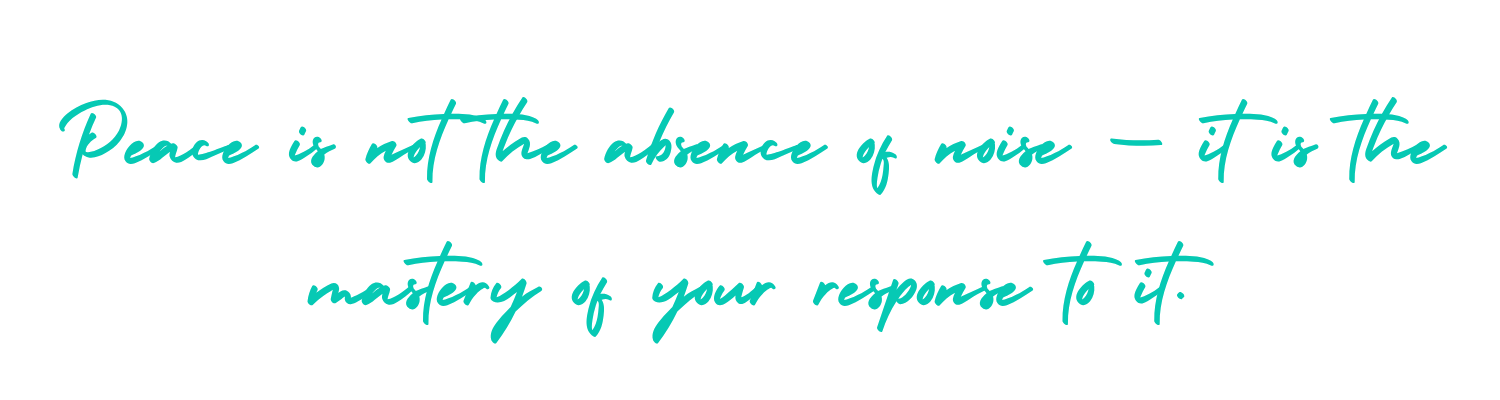
Not the absence of noise, but the ability to remain steady within it especially in the midst of chaos.
FAQ: Vesak Festival & Inner Peace
🌱 Who is Venerable Bhikkhu Paññākāra?
Venerable Bhikkhu Paññākāra is a Vietnamese Buddhist monk and spiritual leader based in Texas. He is vice president of the Huong Dao Vipassana Bhavana Center and is known for his international peace walks the most recent of which was his peace walk to Washington D.C. from October 2025 — February 2026.
🌱 What is Vesak Festival?
Vesak Festival, also known as Buddha Day, is a sacred Buddhist holiday that commemorates the birth, enlightenment, and passing of Gautama Buddha.
🌱 What are the main teachings of Vesak?
Vesak emphasizes the spiritual teachings from Buddha which includes peace, compassion, mindfulness, and the cultivation of inner awareness.
🌱 How can I practice inner peace in daily life?
Inner peace can be cultivated through mindfulness, emotional regulation, meditation, and intentional daily habits.
🌱 What is a walking meditation?
A walking meditation is a mindfulness practice where you focus on each step and your breath to cultivate presence and awareness.
🌱 Why is emotional intelligence important in spirituality?
Emotional intelligence allows you to observe and regulate your reactions, helping you embody spiritual teachings like compassion and peace more effectively. This also allows your emotions to be processed so that your prefrontal cortex has the opportunity to rationalize your actions rather than being impulsive or reactive.
Stay connected with news and updates!
Join the mailing list to receive the latest news, discounts and updates.
Don't worry, your information will not be shared.
We hate SPAM. We will never sell your information, for any reason.
AUTHOR